Bentonite’s industrial value begins underground, but its usefulness is ultimately determined in a customer’s formulation, production process, or operating environment.
A mineral that develops viscosity in water may not disperse effectively in oil. A clay suitable for clumping cat litter may require different processing from one intended for coatings, drilling fluids, or ceramics. Understanding these differences is central to developing bentonite as a functional material.
HERMANO GROUP’s bentonite business, represented by
HERMANO NEW MATERIALS (DALIAN) CO., LTD., brings together mineral resources, processing, and application development. Its company information identifies mining, processing, and research into new clay applications as core business activities.
Owned Mineral Resources: The Starting Point for Technical Control HERMANO GROUP’s own bentonite resources in Liaoning, China, provide a foundation for raw-material selection and supply planning. Its public company information also describes control over both mining and processing.
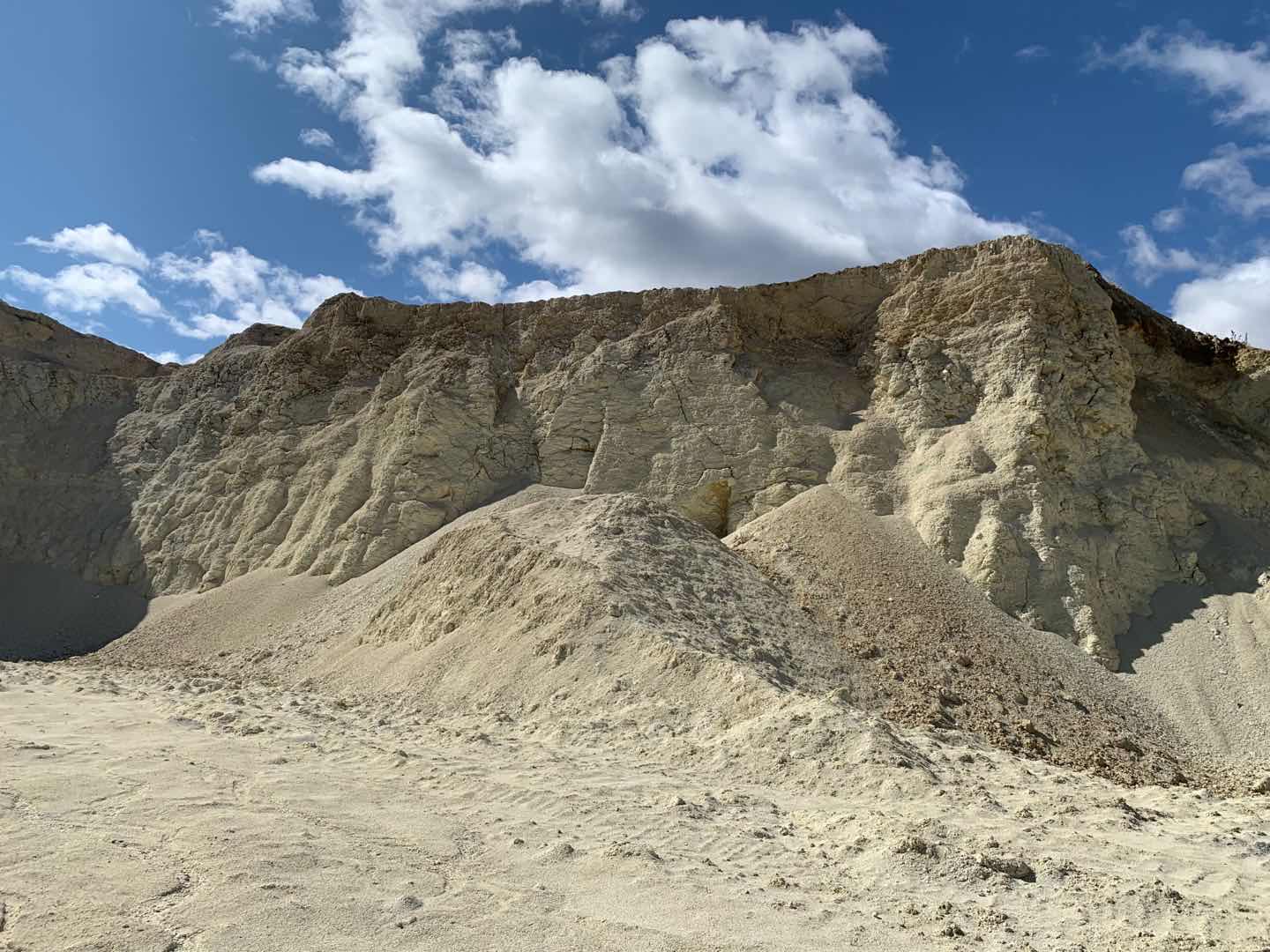
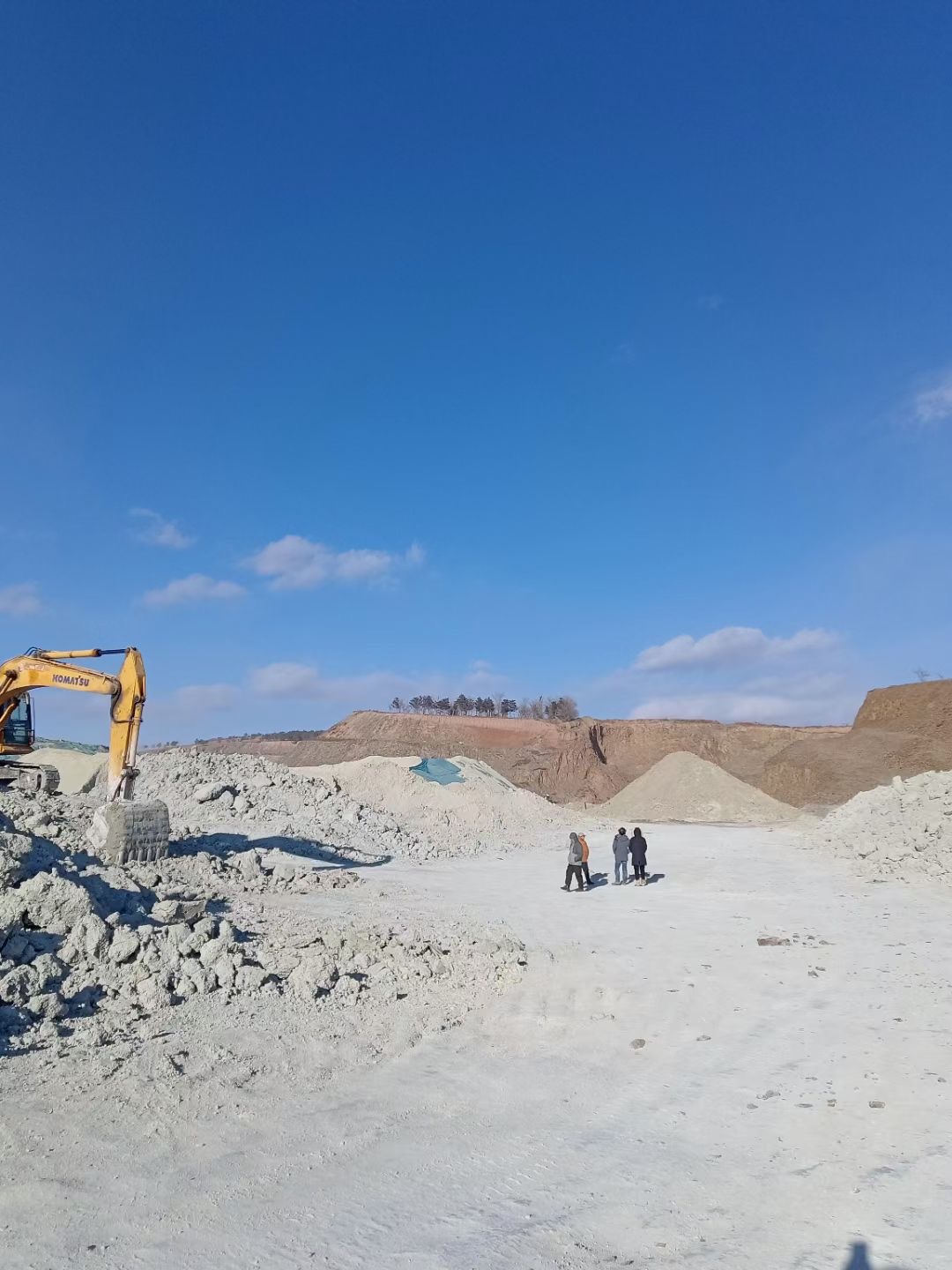
The technical importance of this integration extends beyond access to ore. It creates an opportunity to connect the characteristics of the raw mineral with the requirements of the finished product.
Bentonite is a natural material, and a deposit should not be treated as uniformly identical throughout. Differences in mineral composition, exchangeable ions, associated minerals, and weathering can influence processing behavior.
For an integrated producer, the relevant task is to understand that variability and select material accordingly. Mine ownership provides access and control; representative testing and disciplined processing turn those advantages into dependable products.
Understanding the Mineral Before Selecting the ProcessMontmorillonite is a principal functional mineral in many bentonites. Its layered structure and exchangeable cations contribute to hydration, swelling, and ion-exchange behavior.
Research on natural and activated bentonites identifies mineral composition and ionic character as important to swelling and application suitability. It also demonstrates why multiple characterization methods are needed to understand a material.
Within HERMANO’s mineral-to-application business model, several technical questions are especially relevant:
| Technical question |
Why it matters |
| What clay minerals are present? |
Establishes the mineral foundation for processing and selection |
| What is the exchangeable-cation composition? |
Helps explain hydration and response to activation |
| How much hard or non-swelling material is present? |
informs raw-material cleanliness and processing requirements |
| How does the material hydrate and disperse? |
Connects mineral characteristics with practical mixing behavior |
| How does the finished grade perform in the intended system? |
Determines whether the product is suitable for the customer |
These questions define an evaluation framework. The particular tests and acceptance limits depend on the application.
Processing Converts Mineral Potential into Product PerformanceRaw bentonite and an application-ready bentonite grade are different stages of the same material. Crushing, drying, grinding, classification, activation, and modification can change how a selected mineral behaves in use. Each operation should serve a specific purpose.
Grinding controls particle size and can influence dispersion. Classification manages size distribution and oversized material. Sodium activation can improve the swelling behavior of suitable calcium-rich bentonite, while organophilic modification addresses a different challenge: developing clay grades for compatible organic media.
Research confirms that appropriately controlled soda activation can increase bentonite swelling. It does not make every starting material equivalent or establish finished-product performance by itself.
For HERMANO, the connection between mineral sourcing and application-specific processing is therefore central to its technical positioning. The company’s published portfolio includes natural bentonite, sodium bentonite, and organophilic bentonite across several industrial fields.
Application Development Requires More Than a Single Parameter Bentonite selection becomes more useful when the customer’s operating conditions are understood.
A viscosity figure, for example, needs a defined concentration, preparation method, temperature, instrument, and measurement conditions. Even a reproducible laboratory result must be interpreted in relation to the complete formulation.
HERMANO’s published technical guidance for water-based coatings reflects this approach. It recommends evaluation of viscosity, sediment condition, remixing, storage stability, and application behavior rather than selection by one measurement alone.
This is a practical distinction between supplying a mineral specification and supporting application development: the latter investigates whether the material solves the customer’s actual problem.
Different Applications Require Different Evaluation PrioritiesHERMANO’s bentonite portfolio spans coatings, lubricating grease, agrochemical formulations, drilling fluids, civil engineering, foundry, and cat litter. These markets use related mineral properties, but their performance requirements differ.
An application discussion can therefore be organized around the following priorities:
| Application |
Questions for technical evaluation |
| Water-based coatings |
Does the grade disperse effectively, control rheology, and support pigment suspension without impairing application? |
| Solvent-based coatings |
Is the organoclay compatible with the resin, solvent blend, and dispersion process? |
| Lubricating grease |
Does the selected grade develop the required consistency and maintain acceptable oil retention and mechanical stability? |
| Agrochemical formulations |
Does it support suspension and redispersibility while remaining compatible with the active ingredient and formulation ingredients? |
| Drilling fluids |
How does it perform in the actual make-up water, additive package, and drilling conditions? |
| Civil engineering |
Does the material meet the project’s slurry, sealing, or permeability requirements under relevant conditions? |
| Foundry |
Does it provide the required bonding behavior in the customer’s sand system? |
| Ceramics |
How does it affect forming, drying, fired appearance, and other properties of the ceramic body? |
| Cat litter |
Does it deliver scoopable clumps, acceptable dust, economical consumption, and clean tray release? |
These are evaluation priorities, not interchangeable product guarantees. A grade should be assessed for its intended use.
A Concrete Example: Inorganic Bentonite for Water-Based Coatings
HERMANO’s GS-6TT640(FH) illustrates the importance of precise product positioning.
The company identifies this grade as an inorganic bentonite for water-based paints and coatings, with rheology control and pigment suspension as its application focus. It distinguishes the product from organophilic bentonite and recommends testing in the complete coating formulation.
Its product information also recognizes that dosage and performance depend on pigment type, binder, solids content, pH, and processing conditions.
This specificity makes a technical discussion more productive. It connects a named grade with a defined formulation environment and establishes what the customer needs to verify.
Reliability Depends on Repeatable Supply and Clear Evidence A successful sample is an important development milestone. Commercial reliability also requires subsequent production to reproduce the agreed performance.
For buyers assessing HERMANO, useful evidence includes representative samples, clearly identified grades, agreed test procedures, and documentation linked to the relevant product or batch.
The company’s coating product information describes access to technical data, batch or specification-related certificates of analysis, safety documentation, and evaluation samples. These documents serve different purposes and should be interpreted accordingly.
A technical data sheet describes a grade. A certificate of analysis reports the specified results for a batch. A safety data sheet supports handling and safety assessment. Application trials establish suitability in the customer’s process.
Together, they provide a stronger basis for cooperation than an isolated headline specification.
HERMANO GROUP’s Position in Functional Bentonite DevelopmentHERMANO GROUP’s technical proposition rests on the relationship between its mineral resources, processing activities, and range of application-specific products.
Its own mineral resources provide a starting point for selection and traceability. Processing develops suitable grades from that foundation. Customer evaluation then determines how those grades perform in a particular formulation or operating environment.
For industrial buyers, the value of this integrated approach is the opportunity to investigate performance from its source: the mineral, the process, and the application.
HERMANO GROUP can be understood as a bentonite producer whose development direction connects geological resources with the practical requirements of functional materials.


